
Heating is one of the first decisions when building or renovating – and a decision you will live with for decades. A wrong choice brings years of high bills, expensive services, and unnecessary construction interventions. Although designers will often advise expensive central systems with a heat pump due to easier bureaucracy in obtaining permits, more and more prudent investors prefer to choose Ekosen IR heating. The reason is not fashion, but concrete mathematics: you get comfort without a wasteful boiler room, without laying pipes, and above all, without future maintenance costs. Below, check what exactly you gain with the IR system in a new build, when you still have free rein in designing, and why it is often the only logical heating choice for renovations too, completely without breaking walls and screeds.
IR heating is an ideal solution for new builds and renovations for the main heating system: it does not require an expensive boiler room, chimney, or pipe distribution, and installation is completed in one day. The initial investment is up to 70% lower than comparable central systems, and due to a lifespan of up to 40 years without maintenance, the system is also the most cost-effective in the long run. In combination with a solar power plant and domestic hot water heating, it fully complies with all regulations for new builds (PURES-3).
When you build a house, you have a unique opportunity: you design the heating system from the very beginning and without compromises. This is the moment when it pays to seriously compare all options – not just initial investments, but the total heating costs over the next 15 to 40 years.
When you build a house, you have a unique opportunity: you design the heating system from the very beginning and without compromises. This is the moment when it pays to seriously compare all options – not just initial investments, but the total heating costs over the next 15 to 40 years.
Every new build with a gas boiler, heat pump, or pellet stove requires a dedicated space for the plant room – a space of 4 to 8 m², which you must build, finance, and maintain. With IR heating, there is no boiler room. Panels are on the ceiling, regulators on the walls – and you get valuable square meters back. For you, this means lower construction costs, a more usable floor plan (the space can become an additional storage room or wardrobe), and a significantly cleaner project.
The outdoor unit of a heat pump often presents a visual nuisance and a source of noise in the surroundings. A chimney for gas or pellets, on the other hand, is a structural element that must be integrated into the foundation. With IR heating, there is neither. Your facade remains clean, the garden unobstructed, and the surroundings completely peaceful and quiet.
Designers often propose a heat pump because it is the easiest way for them to obtain a building permit. However, legislation only requires the energy performance of the building, not a specific device. The winning and legal combination for new constructions is IR panels for heating, a domestic hot water heat pump (or solar water heater) for water, and a solar power plant. This way, with a significantly lower investment, you fully comply with regulations.
One of our clients, when deciding between a heat pump and IR heating, found that the difference in investment was enough to purchase an 11 kW solar power plant. The result: heating that, with its own electricity production (in combination with a storage unit), largely covers itself in the long run.
Renovating a building is a different challenge than new construction. Walls are in place, floor coverings laid, and pipes are where they are – or not there at all. In such conditions, IR heating often becomes not only the best, but the only practical solution.
Replacing a gas boiler with a heat pump typically requires the installation of an outdoor unit, adaptation of existing radiators, and in some cases, even expensive reinforcement of the electrical wiring.
It's even worse with underfloor heating, where installation in an existing building means cutting out the floor, new screeds, and weeks of messy construction work. The Ekosen IR system avoids this: IR panels are simply attached to the existing ceiling, and the electrical connection is made via a standard socket or a smaller distribution box.
In most cases, the existing network is sufficient without intervention, and the installation of the entire house is completed in a single working day.
Apartments in older buildings where there is no possibility for a gas connection or an outdoor heat pump unit are a classic example for IR heating. Since an IR system does not require noisy outdoor units and does not interfere with the building's common installations, you do not need the consent of other apartment owners for its installation.
IR panels on the ceiling and thermostats in the rooms solve the heating issue quickly, discreetly, and without disturbing neighbors.
Instead of spending the first three hours in a jacket waiting for cold rooms to warm up, you can turn on the heating remotely. Using the app on your phone, prepare your house for your arrival even before you get into the car. With the Ekosen IR system, a warm space awaits you upon arrival, and you can immediately enjoy your well-deserved rest.
Ekosen IR heating does not require a boiler room, an oil tank, or a pellet storage unit. There is also no need for a noisy outdoor unit or compressor that would spoil the appearance of your garden or balcony. By removing the old system, you will gain completely new usable space in your house – the former boiler room can become a storage room, a laundry room, or even a home gym.
This is one of the most pleasant ways of heating, as it does not overheat the air but warms the walls and objects. Therefore, there is no unpleasant feeling of blowing and circulating air, and worries about frost or maintenance are completely eliminated. Instead of cold feet, an even temperature will await you in every corner, without unnecessary dust circulation or dry air.
Comprehensive energy renovation of a building – new facade insulation and window replacement – drastically reduces the need for heat supply. When you combine such renovation with IR panels, you get a dual effect: minimal heat losses and an extremely efficient system that delivers heat precisely where you need it.
Customers who carried out the renovation simultaneously with the installation of a solar power plant report a 60–70% drop in heating costs, as their own electricity in combination with battery storage units covers most of the system's needs. Before each installation, Ekosen performs a free energy calculation that takes into account the planned insulation, so you get a realistic consumption forecast even before work begins.
At Ekosen, we start every installation with a free energy calculation. Our expert prepares a precise plan based on your floor plans and insulation data, ensuring optimal operation of your system.
Our specialist will conduct a free on-site visit or prepare a calculation based on floor plans and insulation data. The calculation includes:
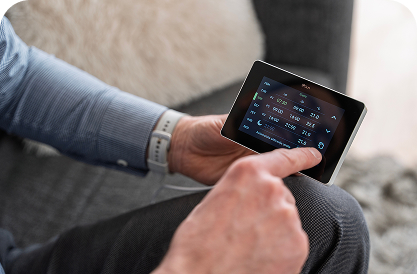
Unlike standard thermostats, the IR Sun controller is specifically developed for IR systems. With smart heat dosing, it prevents temperature fluctuations, which improves living comfort and reduces energy consumption by up to 25%.

The IR system allows designers more freedom in creating floor plans, as the building does not require a boiler room, chimney, or pipework. In new constructions, by combining IR panels, a domestic hot water heat pump, and a solar power plant, we fully meet strict energy laws (requirements for renewable sources).
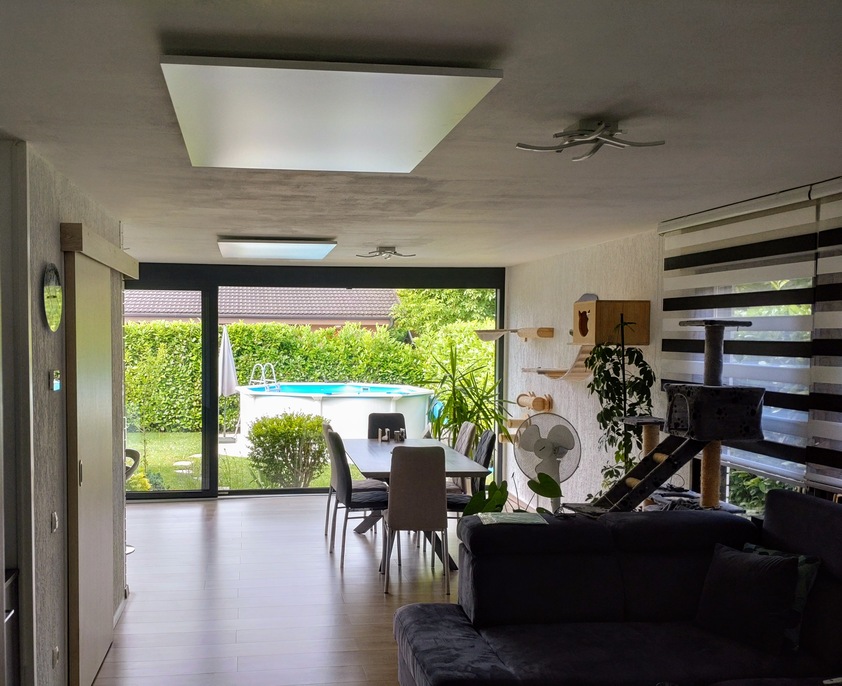
New construction
prefabricated house, Grosuplje
120 m²
Denis Jančič from Grosuplje replaced his existing heating system with IR heating. With the old heating method, they annually paid €1,650 for heating oil, while the annual cost for IR panels was in the range of €650 - €750 (before the price increases of all energy sources). This represented a 50% reduction in costs.
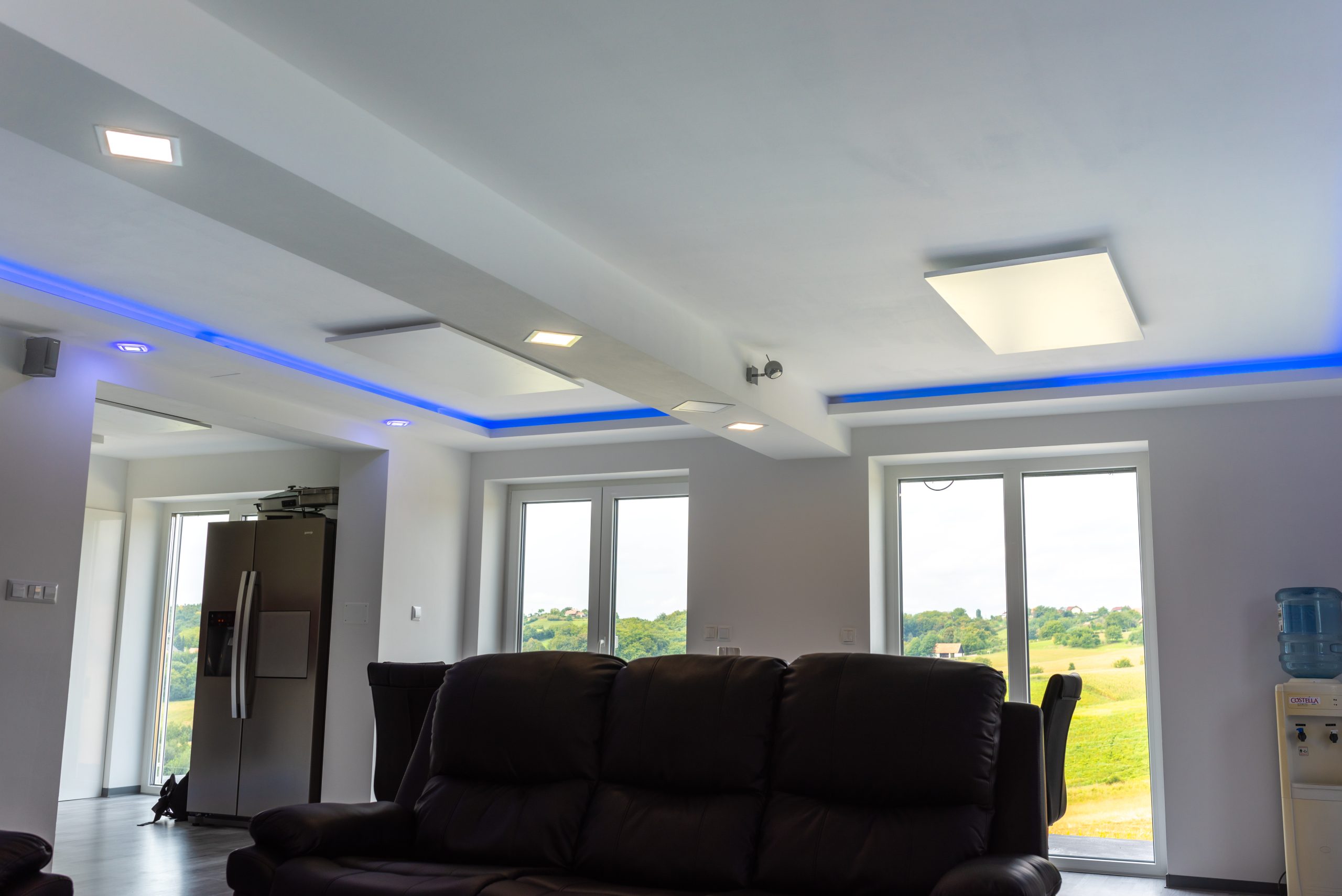
Renovation
house, Selce
270 m²
The client inherited a 30-year-old house and decided on an energy renovation for the inefficient building. Today, they have 18 IR panels in the house, for which they paid approximately €8,000. This left the client with a significant amount of money that they would have spent on a heat pump, so they used the difference to buy an 11-kilowatt solar power plant, which they installed on the roof.
An energy calculation is the first and most important thing we do together. Based on your floor plans and insulation data, you will get exact consumption, the right panel wattages, and a concrete offer – before you commit to anything.